6 Reasons Why Delhi NCR No Longer Feels Liveable — And What Other Indian Cities Are Doing Better
Introduction
Once known as the beating heart of India’s metropolitan growth, the Delhi National Capital Region (NCR)—comprising Delhi, Noida, Gurugram, Ghaziabad, and Faridabad—has long represented ambition, opportunity, and modern living. However, the same region now finds itself at the centre of a growing debate about deteriorating living conditions.
A recent viral discussion on social media highlighted the frustration of residents who feel that Delhi NCR has become increasingly unliveable due to pollution, infrastructure issues, safety concerns, and lifestyle burnout. This article explores six major reasons behind this sentiment and how other Indian cities are handling urban growth more effectively.
1. Air Pollution and Environmental Decline
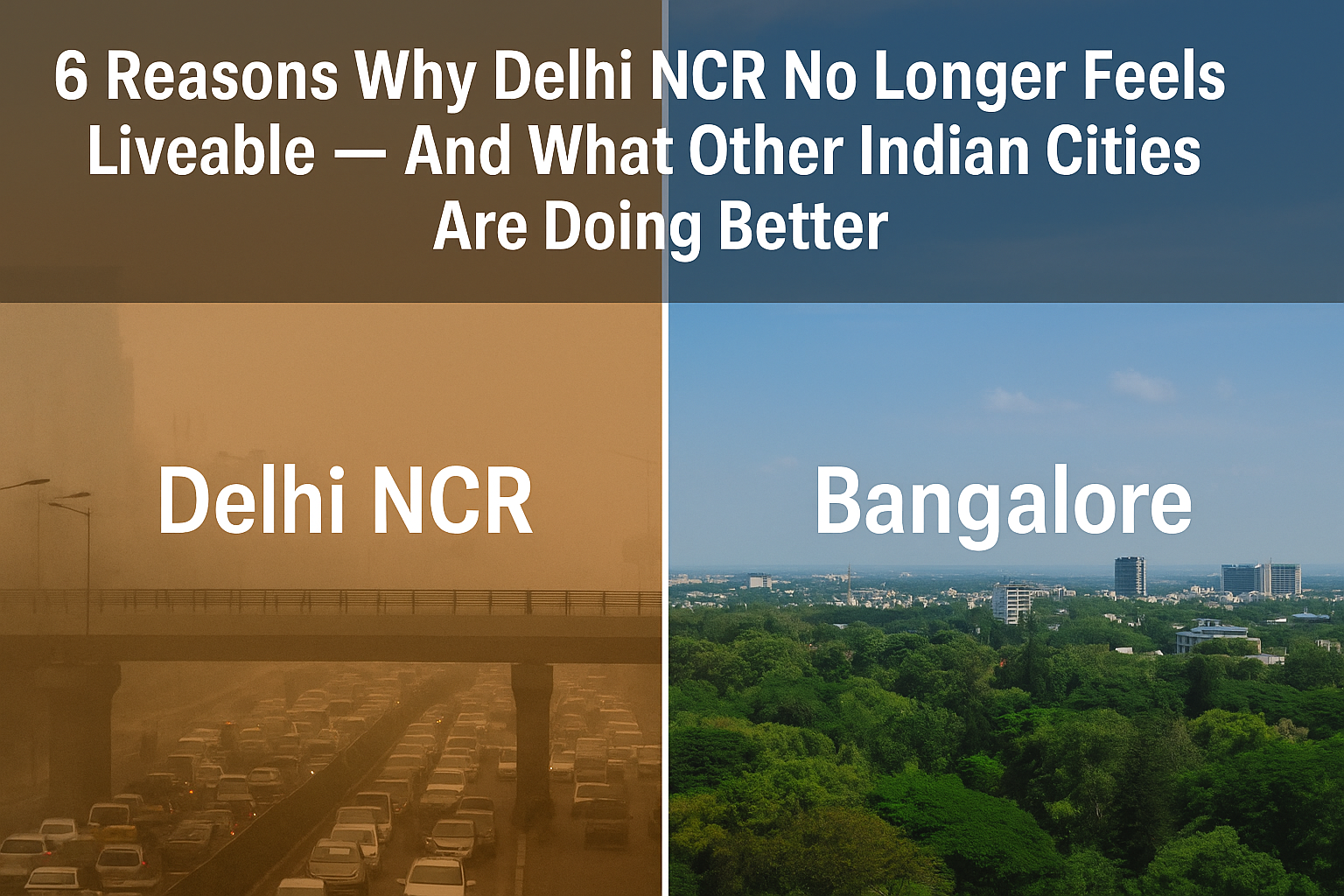
Air pollution remains Delhi NCR’s most critical challenge. Each winter, the city experiences hazardous levels of smog caused by stubble burning, vehicular emissions, and industrial activity. Air Quality Index (AQI) levels regularly exceed 400–500, falling into the “severe” category that poses health risks to residents of all age groups.
This consistent exposure to polluted air has led many families to relocate to smaller, cleaner cities such as Chandigarh, Pune, or Dehradun, where the environment is more breathable and sustainable. Despite multiple government initiatives, air quality improvement remains slow due to poor enforcement and rapid urbanisation.
2. Traffic Congestion and Long Commutes
Delhi NCR’s traffic congestion is among the worst in the country. The region’s infrastructure, though continuously expanding, has not kept up with the rapid increase in vehicles and population density.Residents commuting between Noida, Gurugram, and Delhi often spend up to two hours daily in traffic, leading to higher stress levels and reduced productivity. While the Delhi Metro has improved connectivity, it has not sufficiently reduced road traffic.
By contrast, cities such as Hyderabad and Pune are investing in metro expansion, better public transport planning, and smart traffic management to reduce congestion and travel time.
3. Safety Concerns
Safety—particularly for women—remains a significant concern in Delhi NCR. Despite modern infrastructure and advanced policing measures, the city frequently reports high numbers of crimes against women. This perception of insecurity discourages late-night commuting, outdoor activities, and public participation, all of which affect overall liveability.
Cities such as Chennai and Pune are widely regarded as safer environments, with greater visibility of law enforcement and public awareness campaigns that encourage women to report incidents promptly. For Delhi NCR to regain residents’ trust, improving public safety and community policing must be a priority.
4. Rising Cost of Living
Delhi NCR has experienced a sharp increase in the cost of living over the past decade. Real-estate prices in Noida and Gurugram continue to soar, while rent, groceries, fuel, and education costs have outpaced average salary growth.
For many middle-class families, maintaining a comfortable lifestyle now requires higher income or dual-earning households. In comparison, tier-2 cities such as Ahmedabad, Indore, and Hyderabad still offer a more balanced equation between salary levels and living expenses.
This affordability gap is one of the major reasons professionals are moving away from Delhi NCR to smaller cities that promise both economic opportunity and quality of life.
5. Lack of Urban Planning and Green Spaces
Rapid, unregulated development has transformed large portions of NCR into densely packed concrete zones with limited public parks or green belts. Many residential sectors lack adequate drainage, walkable pathways, and open recreational spaces.
While Delhi does retain heritage parks like Lodhi Garden and Nehru Park, most new developments in the surrounding NCR have prioritised commercial complexes over green infrastructure.
On the other hand, cities like Bengaluru and Pune have managed to preserve a balance between urban growth and environmental protection by safeguarding parks, lakes, and tree cover through stricter zoning regulations.
6. Lifestyle Burnout and Work-Life Imbalance
Delhi NCR is a symbol of ambition, fast-paced work culture, and relentless competition. Professionals often work long hours, spend more time commuting, and face high pressure to maintain social and economic status. Over time, this has created widespread burnout and declining mental well-being.
In contrast, Bengaluru, Kochi, and Goa are attracting remote workers and young professionals who value flexibility and quality of life. The availability of co-working spaces, cafes, and hybrid work models in these cities encourages a slower yet more balanced lifestyle.
The shift in mindset shows that many urban residents now prioritise health and happiness over high-pressure city living.
How Other Indian Cities Are Doing Better
| City | Strengths | Challenges |
|---|---|---|
| Bengaluru | Booming IT sector, pleasant climate, strong startup ecosystem | Persistent traffic congestion |
| Hyderabad | Safety, affordable housing, infrastructure development | High temperatures in summer |
| Pune | Clean air, education hub, balanced growth | Increasing housing costs in central areas |
| Chennai | Reliable public services, safety, planned urban zones | Humidity and seasonal floods |
| Kochi | Green environment, peaceful lifestyle, growing remote-work culture | Limited corporate job availability |
These cities, though not perfect, demonstrate more thoughtful planning, better governance, and community engagement. Their local governments are investing in smart infrastructure, digital governance, and sustainable initiatives that enhance overall liveability.
What Delhi NCR Needs to Do
For Delhi NCR to regain its status as a desirable place to live, it must focus on structural reform rather than temporary fixes. The following actions can make a meaningful difference:
-
Stronger Pollution Control: Enforce strict industrial emission standards and promote electric vehicles.
-
Improved Public Transport: Expand the metro network, introduce more feeder services, and encourage carpooling.
-
Urban Green Revival: Create and protect public parks, community gardens, and tree-lined roads.
-
Enhanced Safety Measures: Increase CCTV coverage, strengthen patrolling, and raise community awareness.
-
Affordable Housing Initiatives: Encourage mixed-income residential planning and rent control policies.
-
Workplace Flexibility: Support hybrid work models to reduce congestion and promote better work-life balance.
The collective implementation of these policies can gradually restore Delhi NCR’s appeal as a modern yet sustainable metropolis.
Conclusion
Delhi NCR’s transformation from a symbol of aspiration to a city struggling with pollution, traffic, and safety challenges reflects the growing pains of India’s rapid urbanisation. While it remains an economic powerhouse, its liveability depends on how effectively the region can balance growth with quality of life.
Other cities such as Bengaluru, Hyderabad, and Pune are proving that sustainable planning, community participation, and environmental responsibility can coexist with economic success.
For Delhi NCR, the path forward lies not in expansion but in introspection—focusing on cleaner air, safer streets, and smarter governance to ensure that India’s capital region becomes not just a place to work, but a place to live well.
Read our latest blogs: blogbreezes